Blue Beach Island
A small rocky island off Nilwella, joined to the beach by a sandbar you can walk across at low tide.

By Ashan LokugeUpdated 23 October 2026
Blue Beach Island At A Glance
- Tides
- Cross only at low tide; the sandbar can disappear at high tide
- Time needed
- 1 to 2 hours
- Best time of day
- Early morning at low tide; sunset is busier
- From Hiriketiya
- About 2 km, 5 to 10 minutes by tuk-tuk
About Blue Beach Island
Blue Beach Island is a small rocky island just off the coast at Nilwella, in Matara District, about 2 km east of Hiriketiya bay. Locals often call the whole spot Blue Beach, and you will also see it listed as Nilwella Beach; on maps of Sri Lanka it appears as Blue Beach Island. At low tide a strip of sand connects it to the beach, so you can walk across, climb onto the rocks and look back along the coast. At high tide, or when the sea is rough, that sandbar can vanish, and the island becomes an island again.
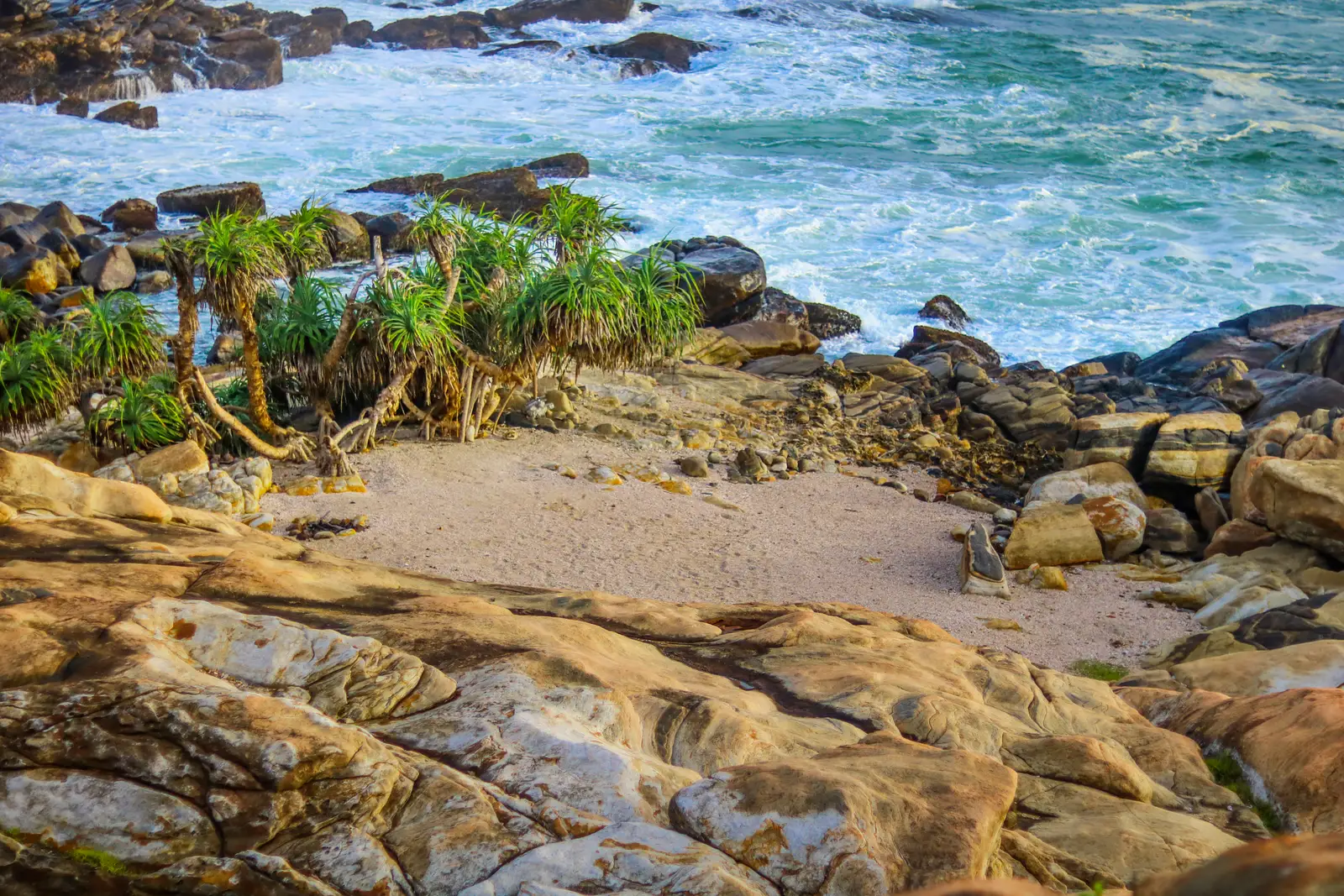
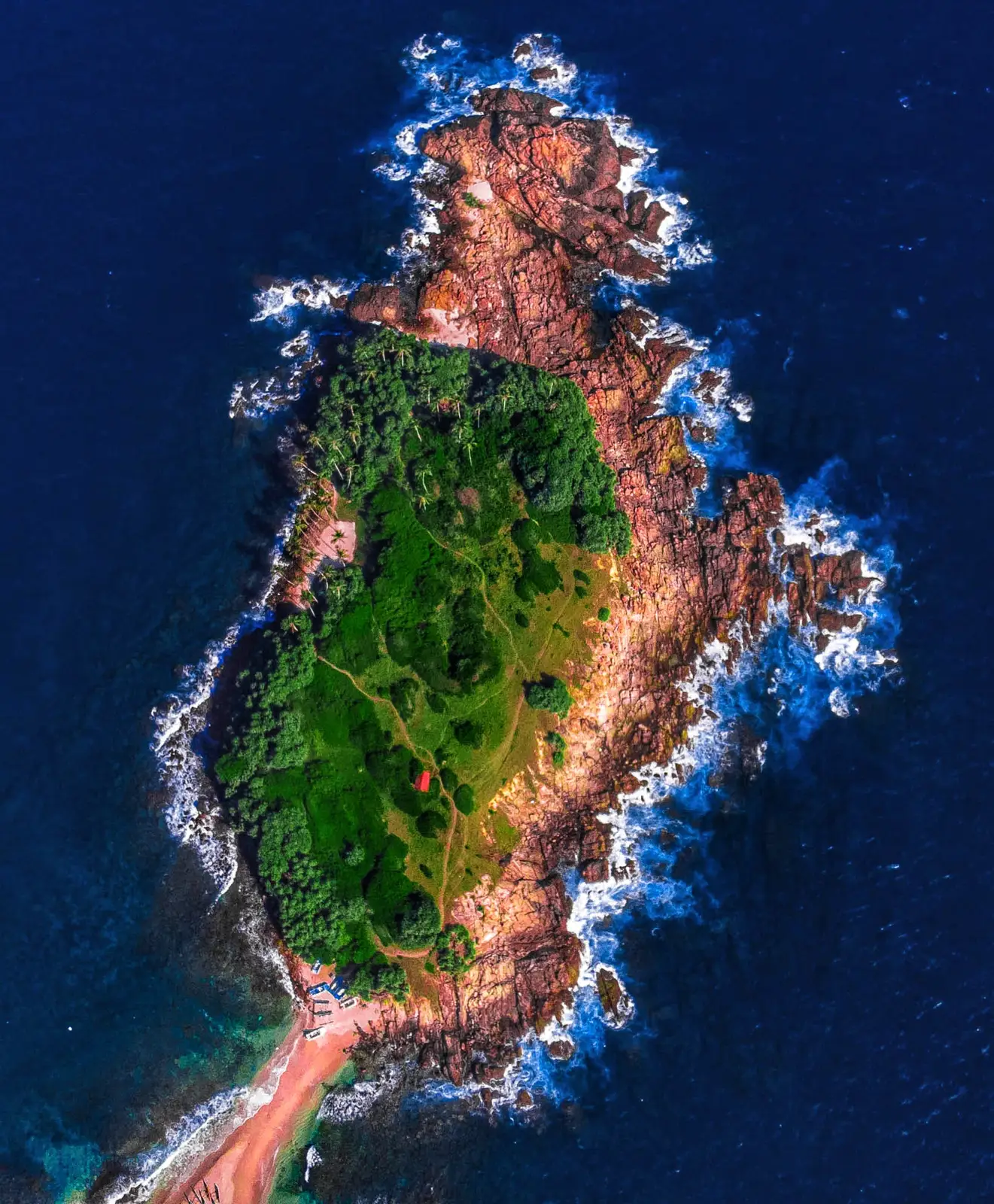
From above, the island is a green, grassy hump ringed by golden rocks, with a narrow spit of sand reaching back to the shore where fishermen pull up their outrigger canoes. On the island itself there is not much more than rocks, pandanus and footpaths, and that is the appeal: a short, scenic walk, a swim in the shallows when the sea allows, and views over the reef in both directions.
It is a favourite with Sri Lankan visitors, especially around sunset, at weekends and on public holidays, when families gather on the sand and vendors sell drinks. The water on the sheltered side of the sandbar can be barely ankle-deep while waves break on the other side, which makes it easy to see where to paddle and where not to. On calm days the sheltered side is gentle enough for children to paddle, and there is a small restaurant by the beach. It has also become a regular half-day trip for people staying in Hiriketiya, and some walk there along the road rather than taking a tuk-tuk. If you are basing yourself in the area, our Hiriketiya Beach guide covers where to stay, surf and eat.
How To Visit Blue Beach Island
Getting there. The island sits off Nilwella Road, about 5 to 10 minutes from Hiriketiya by tuk-tuk or scooter, and around 3 km from Dikwella town. Most visitors come by tuk-tuk, which can wait while you explore. If you are travelling along the coast by car, it is an easy stop between Hiriketiya and Tangalle; our Sri Lanka private driver service can build it into a day of beach-hopping.
Check the tide first. The whole visit depends on the sandbar, so look at a tide table for the south coast before you go and aim to arrive as the tide is falling or at its lowest. Local guesthouses and tuk-tuk drivers usually know the timing. Leave the island well before the tide turns; the sandbar can disappear quickly as the water rises.
Crossing and exploring. At low tide the sandbar is wide and easy to walk. Once on the island, paths lead up over the grass to the rocks on the seaward side. Wear sandals or shoes with grip for the rocks. Facilities are minimal: in April 2026 a small hut by the beach sold drinks and snacks, and you could rent surfboards and masks and snorkels nearby, but bring water and anything else you need.
Entry. We have not seen a ticket charged to visit the island; please check locally, as this can change.
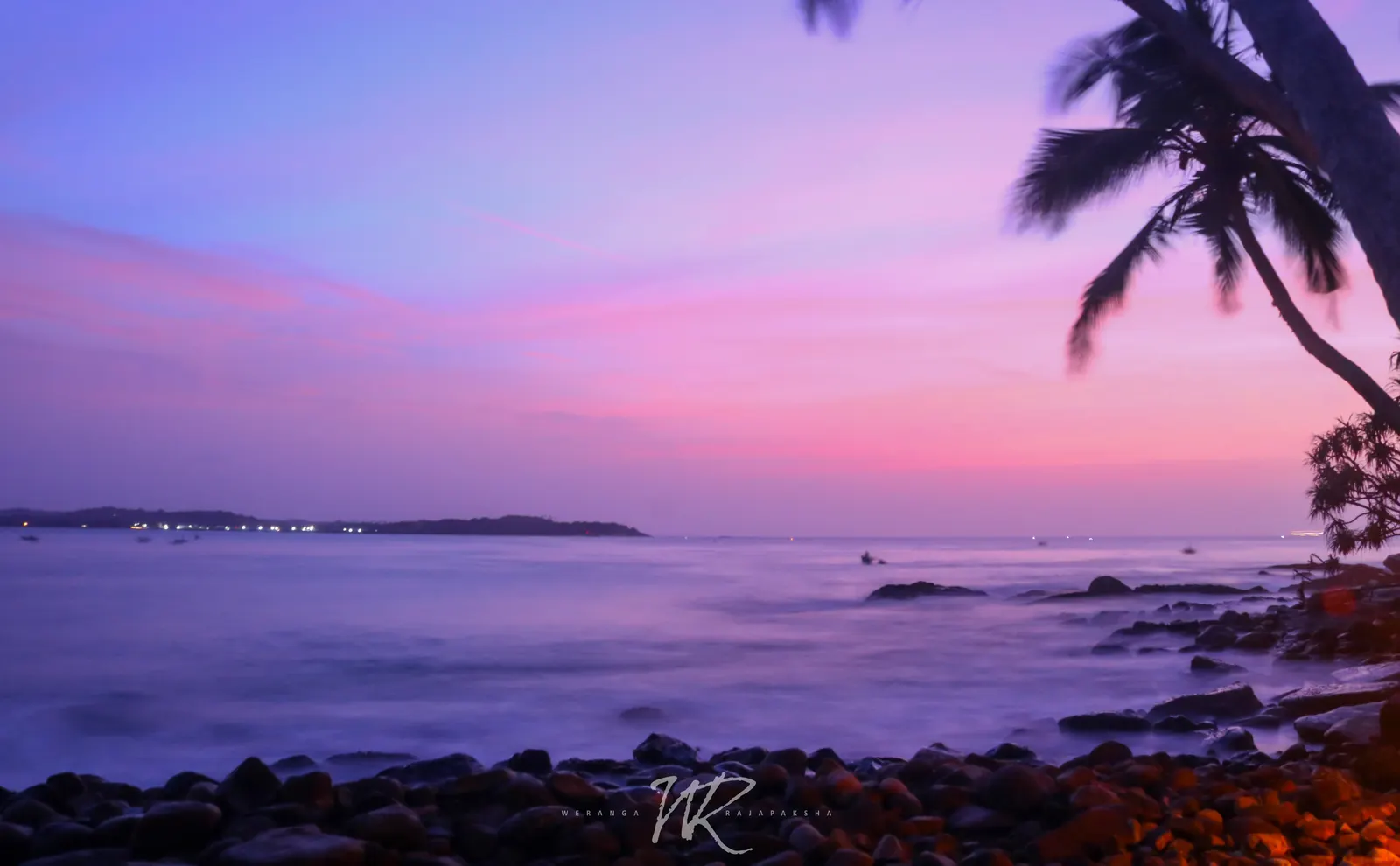
When to go. Early morning at low tide is quiet and cooler, and the light is good for photos. Sunset is beautiful but busier. In the dry season, roughly December to March, the sea is calmer on this coast. From May to September the southwest monsoon brings heavy rain and rough seas to the southwest, according to Sri Lanka Tourism's weather guide (opens in a new tab), and the crossing becomes riskier. Our guide to the best time to visit Sri Lanka explains the monsoons in more detail.
Tips And Safety At Blue Beach Island
Blue Beach Island looks gentle on a calm day, but the water around it is open ocean, and it needs respect.
- Strong currents. Waves break on both sides of the sandbar, and the current on the ocean side can be strong. In October 2025, three local people were swept away by strong currents while bathing near the island; one died, Ada Derana reported (opens in a new tab). Do not swim on the seaward side of the island.
- No lifeguards. We have found no record of a lifeguard at the island. Sri Lanka Police added lifeguard units at many beaches in 2026, as reported by Ada Derana (opens in a new tab), but do not count on one being present.
- Watch the tide. Keep an eye on the water level while you are on the island. If the sandbar starts to narrow, head back straight away rather than waiting.
- Slippery rocks. The rocks are uneven and can be slippery when wet. Take care with children, and avoid the edges in big swell.
- Sun and water. There is little shade, so bring a hat, sun cream and drinking water.
- Leave no trace. It is a small, fragile spot used by local fishermen. Take your rubbish back with you.
Near Blue Beach Island
Blue Beach Island combines easily with the rest of this stretch of coast. Hiriketiya bay is about 2 km west, and our Hiriketiya Beach guide covers its surf, cafés and stays. Dickwella Beach, the long sandy bay beside Dikwella town, is about 3 km away and better for calm swimming. The Hummanaya blowhole near Kudawella is about 5 km away by road, so you can visit both in one morning, and Tangalle is around 14 km further along the coast.
More In Hiriketiya
Blue Beach Island FAQs
Can I Visit Blue Beach Island At High Tide?
You can visit the beach, but you may not be able to reach the island. The sandbar that joins it to the shore is only easy to cross at low tide and can disappear at high tide or in rough seas. Check a tide table before you go.
Is Blue Beach Island The Same As Nilwella Beach?
Yes, more or less. Blue Beach Island is the rocky island off the beach at Nilwella, and the beach facing it is often called Blue Beach or Nilwella Beach. Most visitors use the names for the same spot.
Is There An Entry Fee For Blue Beach Island?
We have not seen a ticket charged to visit the island. Please confirm locally, as arrangements can change.
Is It Safe To Swim At Blue Beach Island?
Only in calm conditions and only in the sheltered shallows near the sandbar. Currents on the ocean side are strong, and a fatal drowning was reported near the island in October 2025. There is no lifeguard on record, so take great care.
How Far Is Blue Beach Island From Hiriketiya?
About 2 km, or 5 to 10 minutes by tuk-tuk or scooter. It is around 3 km from Dikwella town and about 14 km from Tangalle.
What Is The Best Time To Visit Blue Beach Island?
Early morning at low tide, in the dry season from about December to March. Sunsets are lovely but bring more visitors, and the southwest monsoon from May to September makes the sea rougher.